|
Ontology Cult Something can’t come from nothing, and therefore ...
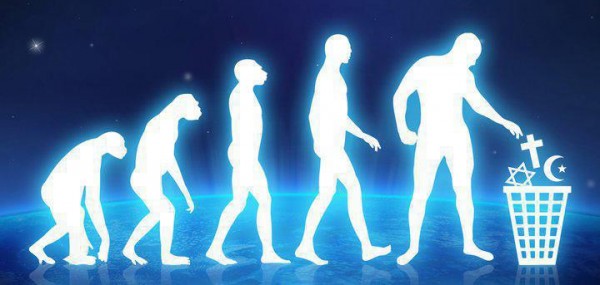
What is the Ontology Cult? The Ontology Cult is a foundational belief system that uses ontological reasoning to form a worldview and a theory of everything. It is not a religious cult; however, those who accept its conclusions may be considered cult members. If you believe that something cannot come from nothing, you may also be open to becoming part of this “cult.” I will present the conclusions of my ontological reasoning first, all based on that central premise. This is for readers who prefer to see the main conclusions before working through the detailed logic and discussion that follow. First, let’s clarify a few key definitions: Ontology can mean different things to different people. For this webpage, I use it to refer to the nature of reality as one defined, fixed, measurable, and observable reality. In this sense, ontology is the branch of philosophy concerned with what exists, including the kinds, structures, and nature of objects. Put simply, ontology seeks to classify and explain entities. By “nothing,” I mean a volume of empty three-dimensional Euclidean space: no air, particles, collisions, motion, fields, or forces within its boundaries. By “something,” I mean anything that did not exist before but exists now. This may be an object occupying three-dimensional Euclidean space, a new movement of something already present, or a new property it did not previously have, such as a different shape or quality. When I use the word “universe,” I may mean the totality of existence (TOS): everything beyond the observable universe, including limits of distance and observation. This includes the three spatial dimensions, time, any proposed additional dimensions, other “time universes,” whatever may exist beyond black holes, energy, gods, spirits, souls, ghosts, empty space, and everything imaginable or real. I will explain “the imaginable” later; for now, let’s include everything. Warning: If you believe something can come from nothing, continuing may not be worthwhile. The ideas that follow could challenge or alter your core beliefs, especially if they conflict with your religious teachings or current understanding of the world. Your religious leader, if you have one, may discourage you from reading further, and your holy book may not provide answers to the questions raised here. Even experienced Christian apologists may find these arguments difficult to address. If you’re ready for the challenge, continue reading. Below is a partial summary of conclusions that will be explored in detail later:
What is the intention of this webpage? This webpage aims to challenge the acceptance of theism. Theism rests on the assumptions that existence had a beginning and that a god created it in its initial state. I reject those assumptions: something cannot come from nothing; the immediate present simply is. This webpage also has a political purpose. As a woke, leftist, atheist globalist, I want more people to understand the truth about reality. If they did, they might re-examine the foundational beliefs they likely absorbed in early childhood. As a result, much of today’s conflict could be avoided. The world’s population and interconnectivity have reached a point where change is necessary to ensure a safer future. That change requires greater global cooperation, sharing, and management, supported by additional continental and oceanic layers of international oversight to help protect the planet. Greta Thunberg, Jane Fonda, and David Suzuki, among others, are heroes to me because they have worked to improve the world for everyone. Yet meaningful change is often blocked by what people believe to be true. Too many still hold inherited beliefs rather than aligning their views with reality. I hope the dialogue presented here can help move us forward. Adopting a more flexible core belief system can help move the world forward while enriching your own life. For more on this topic, see “DONE – How to Flourish After Leaving Religion” by Daryl R. Van Tongeren, PhD.
Here’s the history of the idea that "something can't come from nothing":
The idea that "something can't come from nothing" has deep roots in ancient philosophy. One of the earliest philosophers associated with this principle is Parmenides (c. 515–450 BCE), a Greek thinker who argued that:
Parmenides was born in the Mediterranean area about half a century before Jesus of Nazareth. He was the founder of the Eleatic school of philosophy. His main interests were ontology (the study of being), cosmology, and logic. He concludes in his major work On Nature that:
Then there was Aristotle, an Ancient Greek philosopher and polymath who lived from 384–322 BC. He was a student of Plato and later became the teacher of Alexander the Great. Aristotle's works covered a vast range of subjects, including logic, metaphysics, ethics, politics, biology, and physics. Other early references come from the Milesian philosophers, such as Thales, Anaximander, and Anaximenes, who explored the origins of the cosmos and the nature of existence. Later, the Roman poet and philosopher Lucretius (c. 99–55 BCE) famously stated in De Rerum Natura that "nothing can be created out of nothing". It is unfortunate that the Internet wasn’t available then because all the miserable Jesus-history could have been avoided—and now we are left with much unlearning including the outcome of Donald Trump and his Christian brigade.
<<< This website is under development. Return later for updates. >>> |